3/04/2012

Stove Headed East on Bade Road


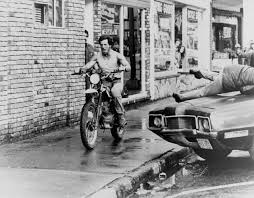
Do You Have a License?, originally uploaded by Patrick Cowsill.
Carlo, Shane and I were having a refreshment in the Hi Life on Lane 12, Bade Road (八德), Section 3 yesterday when this stove drive drove by. I was cursing because I left my iPhone in the office. Whenever there is a good photo-op, I don't seem to have my camera with me. The quick thinking Carlo grabbed Shane's iPhone and went off in pursuit. The stove driver was a bit surprised when Carlo caught up for this shot (above).

2/28/2012

Bradley Manning: A Nobel Peace Prize Nomination?

Bradley Manning, the American charged with the biggest leak of classified information in U.S. history, is in the running for the Nobel Peace Prize this year: http://www.huffingtonpost.com/2012/02/27/nobel-peace-prize-2012-nominees_n_1303614.html It's worth pointing out this major WikiLeaks' cog could could face the death penalty. 

It'll be interesting to see how far the Nobel committee takes this one. It sounds like great news, even with Chinese government asking: "How do you like your Nobel Peace Prize now?"

2/27/2012

You Talkin' to Me?


Spend an hour in Taipei and you'll definitely come away with this impression: the city is awash with taxis. Taipei has a world class transit system and yet taxis play a big part in the shaping of the city's image and culture. I guess there are two reasons for this: they're cheap, typical fares run at NT$150 (a few bucks US), and they're "convenient," probably the most positively received concept in all of Taiwan. To hail a taxi, you're looking at three to five minutes. Often you don't even need to take it this far. Taxi drivers will honk at you if they see you on a sidewalk and sometimes even slow down and follow you, block a crosswalk, etc.

Taipei's taxis have been a topic of discussion recently, thanks to the Taiwanese performer Makiyo. A few weeks ago, she and a friend beat a driver senseless because he had the audacity to ask them to buckle up: http://www.taipeitimes.com/News/front/archives/2012/02/11/2003525188. In general, Taiwanese people seem to look down on the drivers. A common refrain is "they're all ex-cons!" In the Makiyo case, there is a lot of sympathy for the driver nonetheless. I'm guessing it stems from the fact he was beaten up by Makiyo, who is half-Japanese, and a non-Mandarin speaking Japanese friend. I doubt the story would have gotten the same media coverage had the attack happened at the hands of locals. With all of the taxi drivers out there, violence against them must occur on a regular basis. Apart from Makiyo, when's the last time you opened a Taiwan-based paper to a story of an attack on a taxi driver?

I rode in a taxi four times today. Instead of doing what I usually do, which is nothing, I decided to ask the drivers about how often they face violence, and what they do about it. I came away with basically the same story. All four of my drivers have been threatened. This happens on a regular basis too, like every three to four months. None of them were threatened by "foreigners" however (I was specifically asking this question). Usually, problems arise when they are cheated out of their fares. All four drivers said the same thing: they have learned not to confront passengers who do not wish to pay. They have all come to the same conclusion, namely, it's easier just to let it go. One driver told me he was stiffed just recently. It seems three passengers got in a fight while still inside his cab. Then, one passenger pulled out a knife. The other two fled, he giving chase. And wouldn't you know it? Nobody came back to pay the fare. At the end of the day, no journalist showed and no paper covered it. Another driver was also threatened with a knife, by teenagers in Keelung. He did the smart thing and ran away. When he returned to his cab, one of the teenagers was waiting around for some reason. He didn't have a knife, which was unfortunate for him, because the driver knew judo. This driver was interesting fellow; he used to be a sailor and has thus been all over the world. He even told me, upon discovering my nationality, he'd been to Seattle, Portland, San Francisco and L.A. (but I digress).

In my opinion, the life of a taxi driver isn't easy here. Taipei's streets are constantly clogged with traffic. For driving around for 12 hours, I've been told, a cabbie can expect to earn around NT$1000 to NT$1200 (30 to 35 bucks US). After the essentials (gas and smokes), it's closer to NT$800. Personally speaking, I'm on their side. Sure, I have had run-ins with them. I've even taken a driver to court: http://patrick-cowsill.blogspot.com/2010/07/how-to-go-to-court-in-taiwan.html, but 97.5 percent of the time, the experience has been one of satisfaction. I think I'll report back on this topic from time to time and check in with a post when I do have a story about a "foreigner" getting aggressive. I'll also compile some statistics. Right now, it's zero for four.

BTW, you know how some taxi drivers take the head rest off the passenger's seat in the front? I always figured it was for either a) to remove a blind spot when changing lanes or b) to see what the passenger in the back seat right was up to. It turns out it's neither. The drivers don't like it when people try to hail them and they already have fares on board. With the head rest gone, it's easier for us to see inside. I told my wife and she said "That's ridiculous! The light on top of the cab indicates whether the taxi has riders or not." Be that as it may, many cabs are missing the head rest in the front passenger's seat so that you can count heads.

*****
My friend Doug took the two photographs (above and below) on his cool new Nikon D7000 (with the filter on). He's one of the best photographers I know: http://www.thecyclingcanadian.com/


2/19/2012

Jeremy Lin Offered Taiwan Citizenship? How Does That Work?

I was just reading in the Taipei Times (Sunday, February 19) the American basketball phenom Jeremy Lin (point guard for the New York Knicks) has been offered citizenship by authorities responsible for this sort of thing in Taiwan: 

"'Both of Jeremy Lin's parents were born in Taiwan and hold dual citizenship of the Republic of China (ROC) and the US,' [Lin's uncle] said. 'Jeremy Lin was born in California and has US citizenship in the ROC as well as well [as] by the Ministry of Foreign affairs,' [Lin's uncle] said."

The usual problems will occur for Lin should he accept. For example, all Taiwanese men as well as any who take out citizenship (and are under 35) have to do military service. But there is something a lot more interesting about this above assertion, at least to me. You see, if you apply for Taiwanese citizenship, you have to renounce your current citizenship. Of course, once you have gained Taiwanese citizenship, you are then free to apply for citizenships of other countries, including the one you have recently renounced. 

Here's the Ministry of Foreign Affairs spokesperson James Chang: "We have checked with the Bureau of Consular Affairs. The government has never received an application from Jeremy Lin for ROC citizenship."

No kidding they haven't. Jeremy Lin is packing a US passport. If they had received an application, he wouldn't be. 

"'Even though Jeremy Lin has US citizenship, he is eligible for ROC citizenship because both of his parents retain ROC citizenship and because Taiwan allows dual citizenship,' [Chang said]."

I really doubt however Lin will give up his US citizenship to apply for a Taiwan passport. After all, that would really complicate things for him to play basketball and go about living in his own country. Or will they change the rules just for this American because he looks like Taiwanese people?  

2/18/2012

Buckle Up, Taiwan!

                                                                                                    - Image courtesy of Jasmine Yu
Taiwan's new seat belt law, meant to protect the good people of this land, has citizens up in arms and swinging.

A couple of weeks ago, Taiwan's very own Makiyo (the media isn't exactly embracing her as one of our own while at the same time labeling American phenom Jeremy Lin local goods, but that's the topic of another post) took part in an attack on a taxi driver for suggesting she ought to follow the law and buckle up. For his concern, the driver received a concussion, broken ribs, a visit to intensive care and overblown media attention.

The law now reads like this: passengers (or at least most passengers) will buckle up or be subject to a fine of NT$4500. I have not been without my own (mis)adventures concerning the new law.

Tonight, after picking up my daughter and wife on my way home from the office, we hailed a taxi. The concept was simple: we'd worked hard (and played to a similar effect in the case of my daughter) all day long and were dead tired. We thought we'd treat ourselves to ride home in comfort this cold and dark Friday evening, no questions asked, just drop us off where we needed to go. We didn't have it in us for a ride on public transport.

After piling into a cab at the corner of Chungshiao (忠孝) and Linsen (林森), we immediately set about buckling in. My wife first fastened her own seat belt while I held the wiggly Ahleena, our daughter, down and plied her with an iPhone. Then it came time for me, only we could not find the nozzle to fasten the clasp. It was buried deep beneath the seat, according to our driver. I asked him to pull over because he was driving while my offspring and I were not buckled in. He did so and then both he and my wife worked at retrieving nozzle.

A couple of minutes later, we were back on the road. A problem still existed however. Even though the nozzle had been located, I still couldn't get it to go into the clasp of my seat belt: "Try your daughter's clasp," the driver suggested. And like magic it worked. Then I set about trying to get the other clasp to take hold so I would also be battened down. No such luck. I stared at the "Buckle up or pay NT$4500" sticker on the back of the front seat, stuck over the holes where the headrest was supposed to be about ten centimeters from my face, and declared: "It's not working."

"Try again," he said, and we disappeared into the underpass reaching from the Xinyi District of Taipei into Wanhua (萬華). When we emerged, my daughter was set but I still was still not buckled in. That I even cared seemed to annoy the driver. "I'm just going to pull over," he announced. "It's up to you! We can continue or you can get out." In other words, we could go home without a seat belt working or get the fu%# out.

"Good idea," I said, taking him up on his idea. "I've really had enough." The reason I wanted to take a taxi home revolved around a concept of relaxation. This was more than I had bargained for and I explained it in like terms. When we got out, I was surprised, no, make that pissed off, to discover the driver expected us to pay, even though his illegal cab hadn't delivered us to our destination but rather hauled us 300 meters or so down the street and deposited us in a mist of wet coldness. "I've got a better idea," I said. "Right over there is a police station. Do you see it? Let's go over there and report a) how you've gypped us out of a comfortable ride home and b) you're operating without seat belts." I figured I had it in the bag, but instead, the driver took me up on my offer. He even tailed us, as we walked for a couple of blocks in the rain to the station, on this night we'd paid extra to hail a cab to be out of the muck.

Normally, the police are interested to hear a foreigner speak Chinese. This time however they couldn't care less. The minute they heard it was seat belt related, they were fed up. The guy who seemed to be running the joint did not have the time of day for our dispute; he immediately assigned the case to someone who was about to start shaving peach fuzz next week. I will say that the youngster, Officer Liang, was both patient and concerned nonetheless; he constantly scribbled our utterances down in a pocketbook. He then directed the taxi driver to present his cab. After watching the driver enact a dangerous slice across traffic through a busy intersection, one that involved a near takeout of a scooter, Officer Liang had his body of evidence. "OK, let's have a look at those seat belts," he said, choosing to ignore the driver's crazy maneuver over the crosswalk and against a red light.

It was now the driver's chance and he meant to make the most of it. He climbed in the back seat and proved that indeed all the seat belts could be fastened. But, as I later showed, this could not be done in a normal position. The only way such a feat could be achieved was by putting both knees on the seat, an ass against the window and then applying a particular slamming action with the palm.

"I'll knock off 20$NT. He still needs to pay me NT$80," the driver said. 

"There's no way I am paying more than half." Actually half would have been about NT$35, seeing as the meter had run the whole time the driver had followed us, but I held out an NT$50 coin. Here we were arguing over about a dollar. Weirdly, the driver took it and even said thank you. Then, get this, Officer Liang asked me,

"Do you want him to take you home still?" Good idea or what?

In my opinion, Taiwan's new seat belt law, which I accept as a good one, is screwed from inception because the people don't want to conceive of its positive intent. I'm guessing it'll fade out in six months or so. What I experienced with this pugnacious driver is one of the reasons: the drivers don't give a shi%. And why should they? After all, they're simply reading the public will and responding to it. The very next cab we grabbed was no better; my wife clearly asked the driver before we entered this: "Do you have seat belts for all of us?" Once inside, the driver said: 

"People find buckling up an inconvenience, especially if they don't want to go far." When it turned out that he didn't have enough seat belts for the three of us, he simply pulled up to the curb and let us out. There would be other passengers out there in the darkness who didn't care about buckling up to follow the law, so it hardly seemed worth it on a Friday night.

The third driver had a similar attitude: he told us that, even though there was indeed a seat belt regulation, there was no need to fumble about and get agitated, as we were, trying to take care of our daughter, because only adult passengers would be fined! What kind of parents would we be if we only buckled ourselves in safe while ignoring the needs of our four-year-old?

To tell the truth, I kind of admire the scrappiness of the first driver. But.... I didn't care for this: he seemed at the end of the day simply concerned with people getting screwed financially and nothing else factored into his conviction. To me, the reaction to the new law reflects the attitude to the helmet law. When we see motorcyclists in Taipei who wear helmets but do not bother to take such precautions for their offspring, it speaks to this idea: namely, the only reason I conform is I don't want to get a ticket. 

I guess I'm being stubborn and this sounds a bit corny, but Taiwan's new seat belt law is important to me. I will conform to the new law and won't be denied my right for safe, or at least safer, passage.

2/01/2012

Vietnamese Beer


Vietnamese Beer, originally uploaded by Patrick Cowsill.
I have 333 or Saigon Beer in the background and Bia Ha Noi in the foreground. The latter is from northern Vietnam, up Hanoi way. This is the first time I've seen it in Wanhua (萬華), Taiwan or anywhere else for that matter. Wanhua, of all places, is starting to show an Asian-cosmopolitan side. I bought all three of these cans (for NT$35 = US$1 apiece) from a Vietnamese sub sandwich shop I frequent in Nanjichang (南機場) Market, which is operated by a friendly and cool looking Taiwanese man married to Vietnamese woman. The slice of white in the lower-right corner is the piece of paper he kindly slid under my iPhone when I took this shot upon buying the cans.

BTW, Nanjichang (南機場), which means South Airport Market, was the site of Taipei's airport during the Japanese colonial era, hence the name. I've been planning to write about this for some time. I'll follow up pretty soon.

1/28/2012

Bogavilla Trail, Mindoro


We decided to leave the beach for a few moments on our last trip to the Philippines. Our destination: the Bogavilla Trail, Aninuan on the island of Mindora. From our hotel, it was a 20-minute walk. 


Along the way, we picked up Mila. I'm guessing now she'd been following us since we left the hotel. She told us she wanted to be our guide. We didn't need a guide, as the way was clearly marked, but I asked her what the going rates were. She said: "How much will you pay?"

"100 pesos?" I answered. She rolled her eyes, so I doubled the rate and she was on board.


Along the way, we came to Lucy's Bridge. Historical and beautiful, it was the only bridge over the stream running adjacent the Bogavilla Trail. We soon learned to appreciate it, as we were required to cross the stream at least a dozen times. I was wearing flip-flops, not the wisest decision for a two-hour hike. Mila fished them out of the stream on more than one occasion. 


Mila also bundled my child over the water several times. She's brought 11 offspring into this world, so it was second nature to her. She easily earned the 200 pesos we paid her, plus the tip.


Housing along the Bogavilla Trail. Life is pleasant in paradise.


Bogavilla Road, before becoming a trail: I've talked to other Western friends and we're roundly impressed by the upkeep of neighborhoods in the Philippines. Coming from Taiwan, I find this pride striking to say the least. Just to clarify, I was diving into my travel guide the first time I arrived in Taiwan as I had been educated to view Taiwan as a prosperous country. Looking at the surroundings coming in from the airport in Taoyuan my very first time, I couldn't believe my eyes. I didn't understand how rich people could live in such dilapidated buildings or let the landscape fall to such disrepair. When I asked the locals what was going on, the typical answer was as follows: we're going to retake the mainland - there's no need to waste our time or money on Taiwan. More recently, I've been told there's a concept that the home is a castle and anything outside it sucks. In all fairness, Taiwanese people are shaking the dust off this legacy and starting to reclaim their heritage, see lots of restoration of historical sites, park construction and what have you.


Fork in the path along the Bogavilla Trail.


A home and possibly business along the Bogavilla Trail in Mindoro, Philippines.


Here we are at the head of the Bogavilla Trail once again, at the Lucky Store.

There is a connection between Taiwan (and China) and Mindoro. Mindoro, the first major island due south of Luzon, has been on the Chinese compass since the 9th century. This is when trading between people of southern China and this island entered the books. There is museum in Puerto Galera, the major town on the northern part of the island, with vases from China dating back five centuries: http://www.flickr.com/photos/patrick_cowsill/6709732175/ 

On a more personal note, my grandfather was stationed in Mindoro during the Second World War. This is his record:

On June 8 [1945] we flew to Biak again, from Biak to Moratai, from Moratai to Zamboanga, from Zamboanga to Tacloban, and from Taclaban to Mindoro in the Philippines, about 200 miles SW from Manila. This was to be our permanent base for a while. We arrived at the beginning of the rainy season, and for the next couple of months, the rain fell in torrents. Our first tent had no floors, and the ground was usually muddy and [wet]. Everyone was trying hard to find some wood to make floors, but lumber just doesn't exist on that island. However, a couple of weeks later, another crew shipped out and we got their tent, and it had floors in it much to our satisfaction.

Our crew was assigned to the Jolly Rogers outfit, of the Fifth Airforce. Being assigned to the Jolly Rogers was considered a break. This outfit was well-known as it had done some spectacular flying. On June 20 we were formally initiated to the group. We stood around our plane, with skull and crossbones, the Jolly Rogers symbol, hung around our necks, while a colonel administered the oath. The oath was to the effect that we promised to fly every fourth day and lay in the sack at all other times. Anything for a little joke!

When we weren't flying, we could do just about as we wanted. There was a small town about 15 miles away, consisting of approximately 25 houses. This town also boasted a big sugar factory, which had been out of operation for some time, a small railroad and about four engines, a school-house, a jail, and a justice of the peace. Every thing was very primitive, and since there was less to do in town than at the field, I seldom left the field.

My grandpa did leave the field on missions though. I'm pretty sure that since he wrote this in late June, 1945, when he hit the Gang Shan (岡山) Airport in southern Taiwan on July 9, 1945, he did so from Mindoro, Philippines.

To get to the Bogavilla Trail, grab a tricycle at White Beach and head west along the main road. You're looking at about 20 minutes and 50 pesos.

Hot Pot

video

I grabbed this film on my iPhone. With hot pot, you have to cook your own food. You're given a pot with a broth, in this case it was two in a divided pot (mild and spicy); then you are required to boil the ingredients yourself; my daughter was focusing on clams, shrimp and beef.

A lot of people say the best part is the dipping sauce. The key component is sand tea sauce (沙茶醬). Both my wife and I use it. My sauce is usually jazzed up with vinegar, cilantro, chives and fresh onion. My wife hates vinegar. She goes for chilis, chives, fresh onion and garlic. Taiwanese people normally opt for hot pot dinners in the winter. They say it warms the bones. 

1/06/2012

Fishing in Taiwan

This is a video my friend at Taiwan Angler http://www.taiwanangler.com/ put together last summer. He hasn't posted for a month and a half, but it's the cold season in Taiwan:

1/01/2012

The Bridges of Banka

The Hsin Tien (新店) River in Wanhua during the 1800s

I was digging around in the British Consular reports for information on Li Chunshung (李春生), the 19th century (1838-1924) Taiwanese comprador who worked with John Dodd to export oolong tea out of, I think, Danshui. Together, they put Formosan tea on the map. I haven't come up with much, but I did stumble across this 1881 account of Banka, the  Shapichu (Shapaochu) aboriginal word meaning "place where canoes meet," from which Monga (Wanhua 萬華) gets its name. I call my blog "Wanhua Taiwan" so I want to throw it up. The following was submitted by Thomas Watters, the British Consul in Danshui at the time:

Sir,

I have the honour to submit an Intelligence Report for the period from August 6th up to this date [November 9, 1881].

1. Political Summary. On the 12th September the Governor of Fuhkien, the well known Chen Yu-ying arrived at Kelung on a tour of inspection. It seems that by an Imperial decree the coast defenses of this island have been put under his sole control. Before crossing over he sent three officials on ahead to herald his arrival and collect information...

One of the first acts of the Governor was to inspect the Kelung Fort. This he condemned as worse than useless, and he gave orders for the immediate construction of certain outworks for the fort. He did not visit the Government Coal mine, but it is supposed that one of his subordinates went to it in disguise and made numerous inquires. From Kelung the Governor went to Banka [Monga AKA Wanhua] where, it is said he made strict investigation [used as a non-count noun, I guess] into the state of public business in each yamen. On the 15th he visited this place [Danshui], and minutely inspected the now-abandoned Camp behind the Consulate and the site for the proposed new fort. This fort is to be built on the north bank and near the mouth of the [Danshui] river... From Banka he went to Hsin-chu where he beheaded one man and from that he went to Changhua where he beheaded another...

While at Banka the Governor gave orders for the erection of a bridge over the Ya-chia [大甲溪] river. This is said to be an enormous undertaking. The Ya-chia river runs into the sea about 30 miles, I am told, south of Tamsui, at the place where Hsin-chu Hsien borders on Chuan-hua Hsien. During the rainy season it is a vast torrent rushing with irresistible force and carrying with it large quantities of earth and stone. All the Hsien in the North of the island are to contribute men and money and the Governor assigned three months as the limit within which the bridge is to be constructed. But he afterwards extended the limit when he found what difficulties were in the way of the undertaking. The construction of the bridge will cost the people an immense amount of money, and those who know the nature of the river say that the bridge cannot last long. The Governor has given orders to have the bed of the torrent deepened and stone embankments made.

The report veers off now:

The relations between the Chinese and aborigines have been very bad lately. The savages are much exasperated at the inroads which are made on their territory by Chinese woodcutters. Some of these latter were last week engaged in felling a tree when savages attacked them and killed two. This occurred within two days' journey from Tamsui.

An English engineer named Malsch is at present engaged in making experiments at the Petroleum wells in the interior. He is employed, I believe, by the Chinese Merchants Co., but I have not heard whether his operations have been successful. The savages in the neighbourhood of the wells are said to be in almost open warfare with the Chinese...

Watters comes back to Banka at the end, under the heading of General:

On the morning of the 25th September [1881] we had a very sharp shock from an earthquake which lasted a few seconds. It caused much damage among the Chinese houses at Banka, but it only shook the foreign houses. It is said to have been the greatest earthquake experienced here since 1864.

*****

There are loose ends here. First off, was the bridge over the Ya-chia River (大甲溪) ever built? "But he afterwards extended the limit." I'm not aware of any bridges spanning Banka's waterways until the Japanese era. As far as I know, the first was Firefly Bridge (螢橋) http://ow.ly/8f1CE, which went up in the early 20th century, so I'm guessing a few more limits were extended and then he quietly stopped with the extensions.  Although many great public works were imagined at the end of the 19th century, nothing really got built or established until the Japanese took over in 1895. The Ching (清朝) was not only incompetent but also despised by the locals (aborigines and Chinese alike). Neither group wanted to assist the mandarins and the planners they occasionally brought in. They just wanted them to go away. Watters touches on the mood with the murders of the woodcutters and resistance to the petroleum wells.

Were any of the rivers or harbors dredged by the Ching? Again, I know this was a point of focus during the Japanese era. The Ching however let the harbor in Tainan silt up. That's one of the reasons the capital was shifted north toward the end of the 1880s. Ships and boats could no longer navigate the southern port. I've never heard about any important pre-Japanese dredge projects up north either. Banka (Wanhua 萬華), once the third most important dock in Taiwan, fell out of favor in the 19th century because it became so silted vessels could not move up the Danshui River to its shores. When the Sino-French War broke out in 1884, the Ching actually dumped junk in the mouth to impede warships. 

I don't mean to completely rag on the Ching. It seems this fellow Chen Yu-ying had some progressive ideas when he wasn't lopping off heads. The resources, will and vision simply could not at the end of the day been there because the poor fellow was in the employ of the Ching Dynasty (清朝), recognized as a laughingstock by this time in every manner and way.


Report in the easily recognizable hand of British Consul
 Thomas Watters

12/24/2011

Monga (艋舺), Taiwan

d
Monga (艋舺), Taiwan, originally uploaded by Patrick Cowsill.
The above pic forms the back side of a parking lot a couple of blocks south of Lungshan (龍山) Temple, Taipei's second oldest standing temple (1737). I pass by this spot regularly on the first leg of my commute to work. Wanhua (萬華) is composed of these kinds of building complexes; they add to the appeal and make for an interesting stroll.

12/20/2011

Madou's (麻豆) Most Famous Restaurant


Madou's (麻豆) Most Famous Restaurant, originally uploaded by Patrick Cowsill.
Just off the Chungshan (中山) Freeway out of Tainan, you'll find Allen's Wa Gui (阿籣碗粿), a joint specializing in traditional dishes that is packed no matter what time of day you arrive. In Taiwan, crowded restaurants don't scare people away; in fact, they're often seen as a testament to the cooking. Favorites at Allen's Wa Gui include wa gui porridge and pig intestine soup. Allen's is also said to be a favorite of former Taiwan President, Chen Shui-bien, and his family. I have written about this popular restaurant, and Madou (麻豆), Taiwan before: http://patrick-cowsill.blogspot.com/2010/02/madou-taiwan-coming-home.html

12/13/2011

Wa gui


Wa gui, originally uploaded by Patrick Cowsill.

Wa gui is what this traditional rice porridge is called in Taiwanese (碗糕 in Chinese). It tastes like hard cream of wheat with garlic sauce and hard-boiled egg. I ordered this in Madou (麻豆), just outside of Tainan, Taiwan.

12/12/2011

National Museum of Taiwan History Opens


The National Museum of Taiwan History in Tainan (國立台灣歷史博物館), the size of a small airport, is finally on board. After years in the works, those who are in charge got the doors open last month. As I've been going past the construction site for years, I decided to not to tarry. Last night, the wife, daughter and self hopped on the high speed train in Taipei and sped down to Tainan. We spent this afternoon going through the various exhibits, spanning from about 7,000 years ago through recent years. I'm not going to go into great depth. I'm simply going to throw up a load of pics with a few comments to separate them. If you want to know more, you're gonna have to head there yourself.


The wait to get in (on a Sunday) is about 30 minutes. Every 15 minutes, they let another 100 people in. As mentioned, the museum is huge; it absorbs the crowds easily. They're also waving the entrance fee for the time being.


This is a replica of one of the boats that brought Chinese people to Taiwan during the early 17th century. Actually, most of the first Chinese settlers came on Dutch ships, but I still found this one interesting.


A replica of a 17th century junk, the kind that delivered a small proportion of the original Chinese settlers to Taiwan during the late Ming Dynasty era. 


The placard shows that for most of 18th century, immigration of women to Taiwan was impossible. I appreciated this particular exhibit as it's a theme I've been banging away at for ages on Patrick Cowsill Wanhua Taiwan. The question that naturally should be asked is this: how then was Taiwan's population expanded during this era? If you answered Chinese males normally married aboriginal women, and that is why most Taiwanese people contain aboriginal genes, you deserve a bonus point or two. There is lots of stuff here on the meshing of Chinese and aboriginal culture to create the Taiwan we know today: land ownership issues, tenant-landlord relationships (aborigines actually owned a lot of Taiwan's property) and so on. The development of agriculture in Taiwan is also covered in detail. Taiwan's original prosperity was built on its high productivity in this sector. Some interesting anecdotes on the irrigation wars of the 18th century, when neighbors battled each other to protect their water sources, are finely presented in the museum. 


The first 11 non-aboriginal governors of Taiwan were as follows:

Maarten G. SNOCK 1624-5, Gerard Frederiksz RONG DE WITH 1625-7, Pieter NUYTS 1627-9, Hans PUTSMAN 1629-36, Johan VAN DER BURGH 1636-40, Paulus TRAUDENIUSRONG 1640-3, Maximiliaan LEMAIRE 1643-4, Francis CARON 1644-6, Nicolaas G. VERBURGG 1649-53, Cornelius CAESAR 1653-6 and Frederick COYETT 1656-62

None of these individuals are mentioned in the museum (at least so I could see). The language is problematic regarding early colonization. According to the National Museum of Taiwan History, the Japanese "coveted" Taiwan in 1593. Meanwhile, the Dutch "occupied" Taiwan in 1624. But the Chinese "settled down" here during these years, hoping to establish a Han-Chinese "foundation." Notice when the individuals invading Taiwan are non-Chinese, their actions are described in negative terms. 

Japanese colonial era (1895-1945)

Main Street, Japanese colonial era

*****

There is also a narrative on the KMT colonial era, including the 2-28 massacre in 1947 and Kaohsiung Incident of 1979, one of the KMT's final attempts to stifle the democratization movement in Taiwan. In the non-permanent section on the third floor, someone has managed to sneak this comment in: "After 1949, the elites and entrepreneurs who retreated from the mainland to Taiwan not only transferred capital and technology to the island, but also further implemented land reforms and developed an economic development strategy. This finally enabled Taiwan to move from being a developing country into being a fully developed, modern society." Nice try. The Taiwan they found was already the second most developed country in Asia -- the China they came from was a backwater by comparison. The initial reaction of the "elites and entrepreneurs" was to cart off what was left of Taiwan's infrastructure after World War II to China and to snuff out any reaction to their presence with 38 years of martial law. Taiwan's economic success was built on the backs of small and medium enterprises, operated primarily by Taiwanese individuals. These companies, and Taiwan's democracy, eventually prospered in spite of the presence of the so-called "elites and entrepreneurs" who "retreated here," or so I've been told.


My wife figures this museum is the better than the National Palace Museum for various reasons. I got a kick out of it too. I'll follow up with tidbits about Wanhua (萬華), where I live, in the coming days and anything else that comes to mind.


12/04/2011

Education Goes Mental in Taiwan


"Children's First School For Brain-based Learning?" Somehow I doubt the information on this sign is completely correct. I took the shot on my iPhone out front of the Hakka Culture Center near the corner of Fuxing (復興) and Ren-ai (仁愛) in Taipei. BTW, is the kid taking a fart? I don't get it. 

11/27/2011

Taiwanese Guards at POW Camps


Lin De-hua (林德華), World War Two vet and keeper of war records at 
Taichung's War Shrine (台中寶學寺)

In literature regarding the topic, much has been made about the brutality of Taiwanese guards at the POW camps located in Taiwan and other places across Southeast Asia during World War II. The camps in Taiwan mainly held British and Commonwealth troops captured with the fall of Singapore in February 1942. A handful of Americans also ended up here, shipped in from the Philippines after they went down in April 1942. I'll put up a few accounts of what was happening to the POWs: 

"We christened [the Taiwanese guards] the 'Runabouts' or 'Goons.' They seemed to be the lowest type in the army. Very young, they jumped at the commands of the lowliest [of] Japanese privates, who did not hesitate to slap them in the face. Face slapping seemed to be allowed from officer down through NCOs to privates in the Japanese Army. The Formosans were below privates and as we soon learnt, we were at the end of the line . . . These young 'Runabouts' reveled in their power, and they loved to rush into the hut, trying to catch prisoners too slow in bowing and coming to attention." - Jack Edwards, British POW at the Kinkaseki (金瓜石) and Hsintien (新店) camps  

"They certainly went to great lengths to please their masters; one way in which this manifested itself was their treatment of us, the prisoners. They had the right to beat us, and this they did at the least provocation. They were like dangerous children attempting to ape their dangerous parents." - Arthur Titherington, British POW at the Kinkaseki (金瓜石) and Hsintien (新店) camps  

"The 'Runabouts' were also given nicknames: 'The Christian" . . . Rampu or 'Lampu,' because one day he bashed all of us while pointing to a lamp, Rampu (he was an ugly vicious character who seemed to grunt instead of talk) and 'Scarface' or 'The Mad Carpenter,' because he had an old scar on his face, and was in charge of the prisoners assigned to carpentry repairs (he had a violent temper and a vicious punch, as I found to my cost in the first days)." - Jack Edwards

"[Taiwanese guards] were just as cruel. They emulated the Japs very well. The guards would strike you for the most trivial things. You had to stand at attention while they hit your head with their fist. If you didn't, trying to dodge it, then you'd end up with a rifle butt on your head or on the ground while getting kicked. I saw them murder a man, hit [him] on the head with a sword scabbard -- he died that night from the wounds." - Jack Butterworth, British POW at the Kinkaseki (金瓜石) and Hsintien (新店) camps 

"In April, 1943 that changed [at the POW camp in Sandakan, Borneo] with the arrival of Formosan (now Taiwan) guards. The Formosans, like the Koreans in other camps, were brutal . . . My gang would be working and then would be suddenly told to stop. The men would then be stood with their arms outstretched horizontally, shoulder high, facing the sun without hats. The guards would be formed into two sections, one standing back with rifles and the others doing the actual beating. They would walk along . . . and smack us underneath the arms, across the ribs and back. They would give each man a couple of bashes -- if they whimpered or flinched they would get more." - POW, name not recorded

It seems officers interned in the various camps also suffered. Major General Jonathan Wainwright of the US, who was left behind by a fleeing Douglas MacArthur to surrender the Philippines, was for a while at a camp in Pingtung. Dealing with diarrhea one day, he tried to make a dash for the latrine. Almost there, a Taiwanese guard called him to attention and scolded him for not bowing. As a member of the cavalry, Wainwright had become bow-legged, so much so that his legs "looked like warped bamboo" (Daws, Gavan. Prisoners of the Japanese: POWs of World War II in the Pacific. 97). Taking note, the guard jabbed at them with his bayonet and began to laugh. When Wainwright tried to hold his knees together, his feet splayed out. Amused, the guard jammed his legs together and let go. With a scrunched up face, the American general was forced to bear these antics, all the while struggling not to dirty his pants. 

Were these acts simply the expected consequences of war? War-atrocity investigators did not seem to think so. In 1945-46, many of the Runabouts were themselves incarcerated at the very POW camps where the shenanigans occurred while evidence was being collected to unknot the story. All told, 173 Taiwanese individuals, including many of the POW-camp guards, were charged with war crimes. Of the 173, 26 were executed for their conduct. 

In trying to figure out why Taiwanese guards behaved as they did (as part of my master's thesis), I talked to Lin De-hua (pictured above), a World War II veteran himself and keeper of records at Taichung's war shrine. The following is what I came away with:

1. Taiwanese conscripts, as Edwards points out, were at the bottom of the food chain. The pressure of their situation on occasion brought out the worst in them. Beating up on POWs served as a kind of release.

2. Take this job and shove it: Taiwanese conscripts serving in Taiwan did not receive pay. The guards blamed the POWs. Simply put, no POWs meant "bye bye, crummy job."

3. The guards saw the POWs as an obstacle. They were the reason the guards could not return to their homes. 

4. Taiwanese guards were also bullied. Since they experienced violence on a regular basis (face slapping and so on), they assumed it was normal or even okay. To play the devil's advocate, I think I'll point out that this order, given by the Chief of Prisoner of War Camps in Tokyo to the Chief of Staff of the Taiwan Army in a letter dated August 20, 1945 (or six days after the Japanese surrender) was used as evidence by the International Prosecution Section of the British Division 2011 (labeled Exhibit J): "Personnel who mistreat soldiers of war and internees or who are held in extremely bad sentiment by them are permitted to take care of it by transferring or by fleeing without a trace." Many of the guards took this advice. The guards, and the Japanese military for that matter, had to have known their behavior was wrong and this detail seems to support just that. 

5. The worst of the Taiwanese recruits became guards. The best were sent out into Asia to fight. According to Lin, Taiwanese boys were typically drafted at 16 or 17 years of age. Before receiving official conscription notices, called pink slips, which came from the local police station via their bao jia (保甲) head, all male adolescents underwent three physicals. In addition to having their health checked, administrators subjected the youngsters to various fitness exams to test strength and endurance. Upon being conscripted, Taiwanese males were sorted for combat or homeland defense based on these tests as well as their school grades. Lin says kids actually competed to be chosen for the front lines. Why? While combat was obviously considered more dangerous, it was not without its perks. Combat soldiers were the only conscripts that were paid. Soldiers sent off to the front could in certain instances (such as pilots) achieve rank while those who remained, as already mentioned, could not. Making the grade translated into prestige. As a result, the strongest and the brightest served abroad. The dregs went on to distinction as 'Runabouts' and what have you.

6. From October 1944 until August 1945, Taiwan was bombed almost daily. Around 75 percent of the colony's infrastructure was destroyed and many innocent civilians died. This had to have been annoying.

7. Some people are just sadistic. Every country has its fair share of Runabouts and Goons.

11/19/2011

Solar Library and Energy-Optimized House, Wanhua (萬華)


With the Solar Library and Energy-Optimized House (太陽圖書館暨竭能展示館), Youth Park (青年公園) is adding to its collection. This impressive destination in southern in Wanhua (萬華), Taipei already includes a baseball stadium, swimming pool, spate of playgrounds, driving range for practicing golf, cross country jogging track, tennis courts, badminton courts, handball courts, basketball courts, amphitheater, greenhouses, KMT guardhouse replete with watch towers and statue of Chiang Kai-shek on top of a monstrous stallion. There's probably even room for more. During the Japanese colonial era (1895-1945), or so I am told, this was the city's airport. To their credit, Taiwan's new colonial masters have put the space to good use. 

The new library (pictured below) seems alright. There's a decent amount of magazines and vast selection of children's books. There's also a big toadstool for the kids to crawl on. I went over the political section and it turned up a few books on Chiang Kai-shek and son, plus one with Ma Ing-jeou hugging Vincent Siew on the cover -- nothing too risque. There's next to nothing on Taiwanese history, but if you are interested in what may have gone down in China the last 3,000 years, you're in luck. To borrow one of these publications, you must first apply for a library card. It's a pretty easy process. Fill out a half-page application form and provide a single piece of ID, give it to the overseer and Bob's your uncle. With your library card, you are entitled to take out five items. You sign them out and demagnetize them yourself via a computer near the exit.

As an interesting aside, at least to me, I will point out a Chinese tour group was headed in as I was leaving the Solar Library and Energy-Optimized House (太陽圖書館暨竭能展示館). They were posing in front of the sign indicating the new library (above), so I decided to take a shot too. I was saying in a post or two back that certain places in Taipei are targeted on the itineraries of such groups. I think I should amend that: any place in Taipei appears to be fair game. Chinese tourism in Taiwan has got to be on the upswing. I'm guessing Taipei is absorbing most of their NT (though I am lacking stats to back this up).

I'll put a link up to where the Solar Library and Energy-Optimized House (太陽圖書館暨竭能展示館) is roughly. Note: it won't show up on Google Maps because it's new: http://g.co/maps/y85wn. It's close to the corner of Qingnien (青年) Road and Gaoxing (國興) Road.

Solar Library and Energy-Optimized House (太陽圖書館暨竭能展示館), Wanhua (萬華), Taiwan

11/13/2011

KMT Soldier Housing in Taiwan


Soldier Housing, originally uploaded by Patrick Cowsill.

My wife says this is a lane in Wanhua (萬華) that contains the homes of many soldiers who escaped China in 1949. Luckily for them, Taiwan has been generous in taking them in. Some have prospered while all have been measured stability and a decent quality of life. In Taiwan, there is something close 100,000 KMT soldiers still receiving pensions for their service in China during the 1930s and 40s right now.

Black Matsu (媽祖)


北極神宮: The Spirit of the North Star

I took this shot from the grounds of my apartment complex facing south in Wanhua (萬華), Taiwan this rainy Sunday afternoon. I guess I have looked at this spot countless times, but it never registered there was a gate with Chinese characters rich in religious content. This comes from leaving in the opposite direction for the office in morning every day, I suppose. I pass by the lane only at night. 

The characters read 北極神宮, or the Spirit of the North Star. They are advertising a temple inside the lane and inviting people to come. I went to have a closer look and one of the proprietors told me the temple (below) mostly focuses on Matsu (媽祖), Taiwan's Goddess of Fishing (though obviously the Spirit of the North Star would also be relevant to this topic). When I asked her why their Matsu was black, she said: "There are three versions of Matsu," she told me. "One is how She was in life. [Matsu lived in China and after Her death was deified.] The second is gold while the third is black." 

"Why?" I asked. 

"There's no why," the woman at the temple said. "This Matsu is black. It is as it is."

Actually, an explanation exists. According to Internet sources, all Matsu statues once started out as the color She was in real life. Later, when the temples gained wealthy benefactors, it was possible to see more snazzy, gold-faced Matsu statues. Black Matsu statues originally meant the temple had a lot of patrons in general, not necessarily rich. Over time, the statues were smoked black because many incense sticks had been burned in worshipping Her.

We need to be wary though. Recently, Matsu statues have often been made with black wood. Repeated burning by countless and appreciative worshippers have thus done little to bring this about. 

Gaining worshippers is it seems a competitive business in Taiwan, as it is for religions and their institutes all over the world. 

Black Matsu (媽祖), 2.5 centimeters from the right, back row 

*****

My colleague has a new blog called The Cycling Canadian up. It looks interesting and well-written: http://www.thecyclingcanadian.com/  Doug is a pretty expressive individual. This should be worth following.


11/12/2011

Taiwanese Banks Against Minorities

I continue to receive emails off this old post (below in italics, with translation) asking me follow up. The main point I've been getting at is this: Chinatrust Commercial Bank (中國信託) isn't putting in the effort to include all of the people located in Taiwan in the process of receiving credit cards or, for that matter, a complete portfolio of banking services. In fact, it seems Chinatrust Commercial Bank (中國信託) is entrenched in a concept that requires discriminating against out-group individuals who are simply looking to receive a modicum of service. Taiwan's banks, generally speaking, seem to be rejecting anyone who doesn't look right in terms of race. In other words, if you don't look Taiwanese or Chinese, you're not likely to receive the full range of services afforded to people who are able to measure up. This comment is not easy for me to make, but I have to make it nonetheless. 

One (actually several, but I'll bring up my favorite for the time being) of the many responses I received on my last related post underlined some of the negativity that persists somehow in our Taiwan: http://patrick-cowsill.blogspot.com/2009/11/foreigners-getting-credit-card-in.html. Naturally, I feel the need to focus in and point out his or her misguided comment right now:

"You are using words in ways that are not normal. Foreigner in Taiwan means non-citizens. You are not a Taiwanese citizen. What are you railing against? Just because foreigners are a diverse group of individuals doesn't mean you aren't one. Maybe Taiwanese should be careful of their stereotypes of foreigners and foreigners should be careful of their stereotypes of Taiwanese. Sure, but doesn't mean you aren't a foreigner. Nothing in your story indicated that you were discriminated against due to the color of your skin. They rejected you because you are not a citizen. If you think it was racist, prove it. Someone say, of Japanese ethnicity and not a Taiwanese citizen is able to get a credit card and you aren't? And then the really weird usage--why do you appear to mean Minnan by Taiwanese and classify Hakka or waishengren as non-Taiwanese (or conversely that Taiwanese don't include Hakka and waisheng)? That is the only prejudicial/racist thing I can find in your whole story and comments. (That you're informing foreigners that they can get a credit card if they make a lot of noise about it is a good service to the community, but again, it has nothing to do with racism)."


******

Well, I think it is time to respond. At the end of the day, I received a credit card. All it turned out I had to do was write to the American company Chinatrust Commercial Bank (中國信託) was cooperating with and explain their tactics.... A day or two later, one of Chinatrust Commercial Bank's VPs was in my office and presenting a credit card. All I had to do was write my name down. My salary and assets were neither here nor there as I did not have to account for either.


I have it on good authority that Americans of Taiwanese descent who do not have Taiwanese passports can still receive credit cards based simply on basis of them looking like they are of the Chinese or Taiwanese race. This seems to be enough for Chinatrust Commercial Bank. 


Here was my last post on on Chinatrust Commercial Bank (中國信託):

Banks in Taiwan generally refuse "foreigners" credit cards. I guess they're afraid they won't be able to recoup money (I would think this line of doubt should be extended to any customer, regardless of his or her skin color). Taiwan's constitution states in Chapter I, General Provisions, Article 5: "There shall be equality among the various racial groups in the Republic of China (Taiwan)." But it doesn't seem to have had much bearing on this issue. The card hawkers who set their tables up at the doors of Taiwan's department stores, outside theaters or even on sidewalks seem to shiver with fear when they see a "foreigner" approaching. I've discussed the absurdity of this with a local friend who works for a bank in Taiwan, a bank that also denies people access based on their skin color. He told me: "We really don't have any way to make locals pay us back any more than we do 'foreigners.' Credit cards should be issued on salary, whether people have collateral, appear normal, etc. But I just don't want to rock the boat."

About a month ago, I was leaving Costco (Cheng Ho branch) in Taiwan. Chinatrust Commercial Bank (Chinatrust Commercial Bank 中國信託) had set up a booth at the door. Their sales rep., seeing my Taiwanese wife out in the lead, immediately came up to her with an application in hand. My wife, who hates credit cards, turned him down flat. When I had caught up, I said: "I'll apply. What's the process?" These words sent the Chinatrust Bank rep. into a stuttering state of confusion. Aghast, he told me:

"You're a 'foreigner'! It's not possible". Actually, I figured this kind of response was on the way. Several of my friends have been turned down at Chinatrust Commercial Bank Chinatrust Commercial Bank 中國信託) on their credit card applications based on race. One friend, who speaks Chinese, was even offered a card. After he'd finished the application, the teller informed him, upon conferring with her superiors:

"We can't give you a credit card because you're a 'foreigner.'"

Naturally, the whole "you're a foreigner" stuck in my craw. After considering my options, I decided to write to Costco and explain the situation - namely, they were cooperating with a bank that discriminates against out-groups. I asked: "Do you really want this attached to your brand?"

The next day, and for a week following, I received a flurry of email replies from Chinatrust Commercial Bank, who assured me that their bank didn't discriminate. They told me: "It was just a big misunderstanding. We'd like to process your application pronto". They were even willing to send a rep. over to my office at my convenience. When their rep. did show up, a VP no less, he explained: "It was just a big misunderstanding. They're afraid to speak English!"

"But I was speaking Chinese," I countered, "just the same as I am speaking Chinese to you. Plus I can name people who have been told they couldn't apply at your bank because of the color of their skin."

"It's just ignorance," was the reply. "BTW, let me have the name of the rep. so he can be punished."

"That's not necessary [especially if he's following company policy]." I liked the guy and didn't want to get into it. I could see he was trying, and that he didn't agree with what had transpired.

My application was passed seamlessly. I didn't even have to, oddly, submit information about my salary, assets or what have you. Some of my friends have pointed out that I was just being bought off. I can't really verify this. When I emailed Chinatrust back about statistics, in particular, how many "foreigners" have credit cards at the bank, I received no reply whatsoever. In fairness, I suppose it would be violating the bank's confidentiality code and undercutting security. I do, however, now have another credit card, my first Taiwan-based credit card. Did I receive it to shut the f*&^ up? Maybe. I still believe that it could mean that Chinatrust has had to rethink how it deals with its customers. If so, this is great news.

Let me know if you've had problems with Chinatrust Commercial Bank in getting a credit card. They have stepped out into the light to clarify their position. This post, or an email to the bank, might speed things along.

在臺灣的銀行,一般來說,會拒绝發給「外國人」信用卡。 我猜測他們害怕他們無法收回金錢(我認為應該延伸疑慮這一行到所有顧客,無關他們的膚色)。 臺灣的憲法宣示,在第I章裡的總條款下第 5條款: 「在中華民國(臺灣)裡,所有不同的種族,一律享有平等的待遇」。 但是情況不見得如此。 辦卡人員會在百貨公司劇院的門口甚至在路邊,設置他们的桌子,來進行申請手續,當他們看見「外國人」接近時,充滿恐懼。 我和一位在臺灣一家銀行工作的朋友談論過,基本上,銀行也否認發卡與否,是根據他們的膚色。 他告訴了我: 「我們真正地,沒有任何方式,可以使當地人償還多過於『外國人』。 發行信用卡應該取決於薪資上及人們是否有擔保品,看上去正常等等。 但我就是不想要晃動小船"打草驚蛇。

一個月前,我正要離開在臺灣Costco(中和區)。 中國信託商業銀行,設立一個攤位在門口。 他們的銷售人員,看見我的臺灣老婆,走在前頭領路,立刻地伸出手中的申請表來。 我老婆討厭信用卡,斷然的拒绝。 當我往前去,我說: 「我要申請,辦卡過程是什麼?「中國信託銀行人員,聽了這些話,馬上陷入一個混亂地口吃狀態。 嚇呆,他告訴了我:

「您是『外國人』! 它是不可能的"。 事實上,我已預料到這種反應。 我的幾個朋友,在中國信託商業銀行裡,去申請他們的信用卡,都因為種族的原因被刷下來。 一個朋友會講中文,甚而提供了一張個人明片。 在他完成了申請表之後,承辦人員通知了他,經與她的主管商談:

因為您是『外國人』」, 「我們不可能給您信用卡。
自然地,整個「您是外國人」的話揪住我的胃 。 在考慮我的選擇以後,我決定寫信給Costco和解釋情況-那就是,他們與歧視外籍團體的銀行合作。 我問: 「您是否真正地想要此附在您的商標上」 ?

次日,和接著一個星期 ,我收到了大量的電子郵件回覆,從中國信託商業銀行寄的,向我保證,他們的銀行沒有歧視。 他們告訴我: 「它是一種大誤解。 我們希望僅快地處理您的申請"。 為了我的方便,他們甚至是願意派辦卡人員到我的辦公室,來辦理信用卡申請。 當他們的辦卡人員出現, VP沒有,他解釋了: 「它是一種大誤解。 他們害怕講英語!


我反駁的說,「但是我講中文」, 「同樣地我與您用中文交談的。 加上我可以說出是那些人的名字, 他們被告知無法在您的銀行申請,由於他們的皮膚的顏色"。


回應是「它是一種忽視」,。 「BTW,讓我有辦卡人員的名字。 如此他可以被懲罰"。


「[不必要如此,特別是如果他遵照著公司的政策]」。 我喜歡這人,並且沒有想要他牽涉進去。 我看的出來他想設法解決,並且他沒有認同這樣的事件發生。

無聲無息地我的申請通過了。奇怪地,我甚至不需要交出有關我的薪資單,財產或您有什麼的文件。 我的一些朋友指出我是被收買了。 我無法真正地確定如此。 當我回覆電子郵件給中國信託,對於統計來說,特別是,到底有多少「外國人」 在銀行辦到信用卡,我沒有收到回應。 在公正上,我假設它將違犯銀行的機密代碼並且暗中破壞安全性。然而,我現在有另一信用卡,從臺灣發出的第一張信用卡。是否我接受它閉上我的嘴f*&^ ? 也許是, 我仍然相信它可能意味中國信託必須重新考慮怎麼處理它的顧客。 如果那樣,這是了不起的新聞。


讓我知道,如果您與中國信託辦理信用卡有發生問題。 他們須站出來說明他們的情況。 對銀行來說,這個發表或者電子郵件,也許會加速事情完成。

注:登廣告者在2011年2月與我聯繫。 他們希望我加入這個鏈接。 我沒有任何問題 對於多年來我是在我自己的口袋(部落格)來投稿發表 。 加上,我至少沒找到他們的公司有任何麻煩。 如果您對這個理念持相反意見,請告訴我。 無論如何,這裡去: 它是為修復信用(credit repair)的公司。