9/26/2011

It's Taipei Signs, I Think


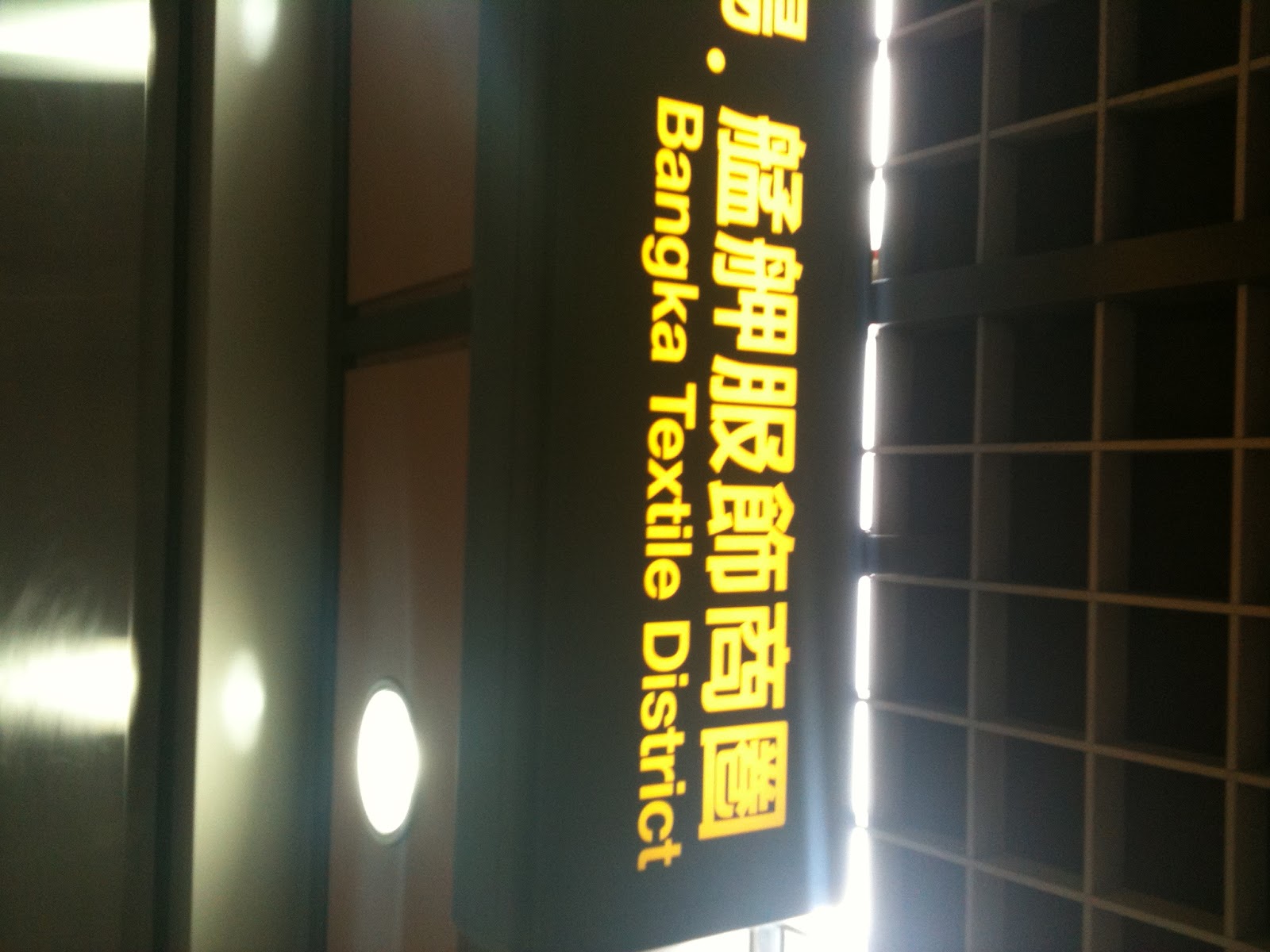
I received this message from an annoyed Twitter pal, responding to one of the signs of Taipei I had posted: "No, I can't handle the heat. Now leave me alone. Stupid adverts. Let me get to work!" I didn't realize I was causing so much grief with my iPhone Tweet-photos, nor do I intend to leave off with them. The signs of Taiwan bring joy, confusion and thought to many. Filled with the spirit of this knowledge, I grabbed the above sign coming out of the Longshan (龍山) Temple MRT today. It is language chaos at its finest. The character 艋舺 is the Taiwanese name for the neighborhood I live in -- 萬華 (Wanhua). The Romanization Bangka means canoe in one of Taiwan's aboriginal languages. 

*****


I showed the two shots directly above to a friend (I took them on the Yuan-shan MRT platform a while back) and he said I should follow up. You see, Taiwan is normally tolerant when it comes to religion. I didn't really know how to follow up though. If I were to go over and ask the security guard, my questions would surely vex him. Or, he would avoid getting in trouble and not tell me anything. 

I am no expert on Taiwan's various religions. The main religion here is, from what I can make out, a combination of Taoism and Buddhism. Instead of being resistant, this religion seems to incorporate a range of possibilities. I've also heard that Taiwanese Catholics have special permission from the Vatican to worship their ancestors. The Catholic clergy has adjusted and gone from there.

*****

Let me reiterate: Taiwanese people in general are tolerant. I'm married to a local and her Taiwanese family has definitely taken me in. They are the nicest people I know. I am now going to segue into a facet that probably doesn't reflect the population as a whole. Still, this blog does exist for the blog author, so I think I'll touch upon an incident that disturbs me. I'm going to write it down before I forget. Someday, I'll look back at this head-shaker to know where I was at this moment.

A couple of weeks ago, someone I know posted a picture of herself with an African-American friend of mine. The first comment was as follows (here is the rough translation): "Funny! The reason you put that picture up is to highlight your own pale skin!" The African-American friend was a.) tagged in the photo b.) able to read the Chinese quite easily. To her credit, she responded: 

"I think his skin color is beautiful." It was clearly time to chime in and I directed my point of view at the first speaker:

"That is the most retarded [bad choice of diction, I admit] thing I've heard all week." To my surprise, I was informed I think too much. Huh? Think too much? It's not like I had written a paper on it. The line I wrote took me about 10 seconds. 

I was also told the reason I didn't like the comment was I didn't know how to assimilate into Taiwanese culture. Is this actually Taiwanese culture though? I know lots of Taiwanese people who would find this line of labeling disturbing, starting with my wife. They would say: "No, it is not us." Ironically, what had started out as an attack on (aversion to) my friend's skin color had come around to focus on my skin color. The groundwork for the conversation became "I was white;" thus, I had no right to an opinion. Let's just say it came down to rights; more specifically, it was one person telling another they did not have rights. 

My wife is adamant: That is them, just a small minority, not Taiwan. I am inclined to believe her. The optimist inside says most people are not like this. It's just a few giving everyone a bruised eye.  

9/22/2011

Can I Have Another Bowl of Soup?


Taiwan’s President (upper and lower) showed up at my apartment complex last night. I missed his speech, but I did manage to get a few photographs. This is the second time the KMT has used our home for a political rally since I moved in. They were also here for Hau Long-bin’s (郝龍斌的) last mayoral run.

I’ve taken some flak for allowing my daughter to have her picture taken with Ma Ing-jeou (馬英九). One guy even told me he’d never let his daughter be exploited like that. That seems like a bit much. I will say this though: I didn’t plan on going to the speech. I just wanted to hang out in the courtyard and people-watch. I love a good spectacle and am not overly serious about politics.

This is how it went down: My daughter asked at the front door if she could go in. She was then gruffly brushed aside by a dullish bodyguard. One of Ma’s advisors took offense at his attitude and said: “Of course you can go in. And you can sit in a reserved seat at the front too.” Once inside, Ma noticed my daughter and waved for her to come over. I wanted to get some shots to amuse my friends, in-laws and self, and so I encouraged her to do just that. A nice conclusion for all involved.

I think I will have to go to the next tenant’s meeting and voice concern about the following though: When I asked the building supervisor how much Ma’s team was paying for the use of our multi-purpose room, he did an “ah” and hand sweep to indicate it was silly to worry about such trivial matters. Meanwhile, I’m paying NT$2000 a month in building fees. We don’t have a swimming pool. We don’t have a library. We don’t have a rec. room. We don’t have an indoor playground / play land. No Friday night movies. In other words, our money is just going into a black hole. Building management is so cheap when it comes to the tenants that when the lock was replaced on my building, only one key was issued to my family. When I said I’d like two or three, I was told, with much hyperbole, it was quite impossible (沒辦法) because of the budget. Under such circumstances, let’s hope an individual representing one of the richest political parties in the world doesn’t get to use our multi-purpose room for free.


9/03/2011

Another Wanhua Business Bites the Dust


I grabbed the shadowy picture above on my iPhone coming home today. This place was, until last Thursday, our neighborhood's most popular Shabu Shabu restaurant. It's right around the corner from where I live in Wanhua (萬華), Taiwan.  

Shabu Shabu is from Japanese and means, I think, swish swish. It's an onomatopoeia for how the food is (should be) cooked at this kind of establishment. The process for getting your meal is as follows: Customers are seated at tables with individual pots. They then choose what broth they would like and it is poured into the pots by the server.  Once the broth comes to a simmer, they add vegetables, meat and other. The meat should be held in chopsticks and swished back and forth until cooked. In Taiwan, however, the meat is simply dumped in the pot and cooked until well-done. When the ingredients appear to be cooked or over-cooked (every man to his own), they are fished out and seasoned for eating. New ingredients are continuously added by the customer, who is also the cook. Seasonings include green onions, garlic, chili, cilantro parsley, soy sauce and sand-tea sauce (沙茶醬), which is a clumpy peanut butter and fish sauce. I usually throw a little white vinegar in as well. Here's a link for the run-down on how to proceed at a Shabu Shabu: http://www.squidoo.com/hotpot

The reason I took this shot was my family just ate dinner there 12 days ago. It was a Monday night and still the place was packed. The restaurant was popular because they had all-you-can eat vegetables, shrimp and clams, ice cream and cakes. There was also a soda pop machine, coffee brewer and half a dozen varieties of tea. To top it off, these creative restauranteurs kicked in a multi-tiered chocolate fountain for marshmellow and cookie dipping. Who would have known the restaurant was on its last legs? I guess there were signs though, see the outrageous bill we paid -- almost NT$1,000 which included new goodies (a ten-percent service charge even though you retrieve the food yourself and do your own cooking and a NT$140 surcharge for infants). 

When a restaurant that can fill its tables on a Monday suddenly closes down in Taipei, it's a probably a matter of paying the rent. This is how it seems to go here: If you can't bring in customers, you shutter because you're not able to make ends meet. If you are successful, the owner of the property recognizes you are in the black and raises the rent to a rate that you can no longer be profitable at. Two McDonalds and a Wellcome Supermarket have also left our community in the last couple of years. Not that I am lamenting these facts. I was curious about McDonalds vacating the corner of Wanda Road (萬大路) and Dong Yuan Street (東園街) though. After they left, the landlord wasn't able to find a tenant for this extremely high-activity spot for over a year, and I'm guessing it came down to a staggeringly high rent proposal. (Cafe 85 has since moved in and is packed into the wee hours.)

My family has a lot of memories from this Shabu Shabu spot. In a previous life, it was the banquet hall in which my brother and sister-in-law were married. I'll never forget being left with a bag containing around US$10,000 full of red envelops after all of the festive relatives, friends and associates had staggered off. That'll teach me not to go off for a last-minute leak. Anyway, I did the negotiating for their wedding dinner. I am proud to say I held my own too; I even pretended to count empty beer bottles. 

I wonder how long it is before another business establishment settles here, how long it lasts and what it is. Hopefully, the new owners will take into account the high turnover of previous businesses when they enter into negotiations. 

8/28/2011

Wouldn't You Know It but It's Derrick Rose in Taipei

Derrick Rose, Chicago Bulls 

This afternoon, my family was taking refuge from Typhoon Nanadol in the Alley Cats Pizza Parlor across from Taipei Main Station. This particular Alley Cats is in the northeast corner of K-Mall AKA the Taipei Digital Mart, a scuzzy labyrinth of cell phone shops and booths. We had originally planned to feed all of our old bread to the ducks in 2-28 Park (my daughter's idea), but were, like pretty much anyone in Taiwan with outdoor plans, rained out. 

I was in the midst of tweet photo-ing a pic of the papery pizza being passed off as a meal (for NT$480 a plate too) http://lockerz.com/s/133592055 in this establishment to Doug, a Canadian food connoisseur I have the pleasure of knowing, when my wife started pointing at a commotion going on behind my back. "It's so exaggerated," she complained. "Why does that guy need all those bodyguards to buy a cell phone?"

"It's a media stunt," I guessed, putting the final touches on my tweet photo comment to Doug. "Watch. The evening news will be making a big deal out of this too. It's probably a buy-two-get-one-free deal that the 'media' deems newsworthy."

"He's got four or five security guards. I think he must be a diplomat," she said, ignoring my observation.

"That's funny. Since when do diplomats in Taiwan have bodyguards?" I asked, turning. The first thing I noticed was indeed four or five men with earpieces. They were all in suits, hands thrust in pockets, heads down, brows furrowed, trying to appear intimidating. Then I saw Derrick Rose of the Chicago Bulls, last year's MVP of the NBA, bargaining at a Far-East Telephone booth for a cell phone. 

"That's not a diplomat," I exclaimed. "That's Derrick Rose, last year's MVP!"

"What's the MVP?" she wanted to know. "Is it comparable to the NBA?" My wife is actually pretty familiar with the NBA. We used to go to NBA games when we lived in Cleveland. She knows names such as LeBron James, Kobe Bryant and Dirk Nowitzki. I wasn't explaining anymore though. I was already over at the phone booth, taking pictures on my iPhone and picking the bodyguard I was standing next to's brain. He told me that Rose doesn't like people getting too close; that's why he was personally getting the security-guard overtime bucks. Then my wife brought my camera over and I took the shots above and below.

I've seen American athletes on show in Taiwan before -- Dwight Howard and Frank Thomas, to be precise. Neither seemed to have need of bodyguards. I ran into Dwight Howard playing on the basketball court inside the Eslite (誠品) Bookstore Mall in Ximending (西門町). He was not only bodyguard free, but even mingled in the crowd, hugging people for photo-ops and yucking it up. Howard is a pretty big boy though. Plus this kind of affable hands-on approach suited his larger-than-life personality. I saw The Big Hurt in Kiss Disco. Seated at a table across the room, he was introduced to the crowd by Huang Xiao-hu (黃小虎), the singer performing that night. 

I guess it shouldn't strike me as too weird that Derrick Rose had bodyguards in tow. Sponsors and handlers have been pulling their hair out ever since he entered the NBA as he regularly ducks interviews and has trouble performing in advertisements. His shyness has been making it hard for them to cash in. He's only 22 though. He'll probably come around and become every bit the shill for big corporations that the last great Chicago Bull, Michael Jordan, was. And I'm sure he isn't in Taiwan strictly as a tourist right now, during Typhoon Nanadol.


8/22/2011

British Consul Reports at the Hand Over


I've been reading through the reports of the British consuls Perkins, Hopkins, Layard and Bonar covering 1895 and 1896. As you probably already know, 1895 was the year the Chinese government washed its hands of Taiwan, abandoning the island to Japan as one of the conditions of the Treaty of Shimoneseki. 

I'm going to put up a few points that amused me. No argument is being developed here; the items are random.

1. Japan pretty much introduced beer to Taiwan. Considering how ingrained beer is in Taiwanese culture (I guarantee it's the most consumed alcoholic beverage in Taiwan), you'd think it would have had a longer history. Writes B. Layard, the acting British Consul of 1895, to the Marquis of Salisbury: "The amount of beer imported reaches the value of 2,023 l., and that of wine and spirits, which may properly be mentioned here, to 2,921 l. [One hundred] l. of the former, and 226 l. worth of the latter only having been imported before June, 1895."

Henry Bonar, who took over for Layard, brings up beer again in a statistical run-down of shipping for the following year: "Taking the articles alphabetically, the import of beer has quadrupled itself, and is a large item at 9,597 l. Nearly all of it is German brewed beer. Japanese brewed-beers find no favor in this climate, and the light beers of German manufacture evidently are quite harmless."

To this day, light or yellow-colored beers are the most popular beer in Taiwan. Taiwan Beer, easily the top-selling beer in Taiwan, used to have an ale. Nobody bought it though. I've been told the reason for this was it reminded consumers of medicine. To me, Bonar's explanation seems more likely. BTW, the spike in beer sales in 1895 and 1896 can be attributed to the large influx of Japanese immigrants and not a sudden demand amongst Taiwanese people. Writes Layard:

"The Japanese population, whether from insufficiency of good spring water, or as a supposed antidote to the ill effects of the malarial climate, is consuming great quantities of alcoholic beverages, the average per head being, I am informed, three times as much as Japan proper."

Layard also talks about the connection of beer to the weather: "The favorite beers are of the lighter kinds, chiefly German, Lager, and Pilsener, imported from Hong Kong, the beer of Japanese manufacture, although cheaper to import, commanding little sale, as it will not keep in this climate." 

2. A lot has been made of how European powers used opium to gain control in China. Layard's 1896 report seems to suggest it was Chinese traders, not Europeans, who facilitated wide-scale abuse in Taiwan:

"The import of Persian opium [by European traders] has fallen from 1,880 cwts. in 1894 to 860 cwts. in 1895. It is not possible to give an estimate of the Chinese opium which has reached this island in junks, as it does not appear in the customs returns, but great quantities have without doubt been landed all along the coast.

Of late years the consumption of the foreign drug has been considerably curtailed [halved within a year of take over if we are to believe Japanese statistics], owing largely to the increased import of the native drug, which is much cheaper and is largely used for mixing with the foreign article. This trade has been steadily passing into the hands of the Chinese, and sales by foreign houses of late years have been of a much smaller extent than formerly."

To their credit, the Japanese did not criminalize drugs. Instead, they took a more practical approach, issuing licenses to the addicts they inherited but not to new applicants. They also created a monopoly which was, as monopolies tend to be, highly restrictive and yes, profitable. 

3. Getting away from merry-making, here's N. Perkins on the Paiwan, one of Taiwan's 23 aboriginal groups: "The former of these groups is scattered in small villages along the east coast of Formosa [the old name for Taiwan] from Pailam to South Cape [I'm guessing Pailam is Puli while South Cape could be Kenting]. Tradition describes them as descended from a ship-wrecked crew of white men who were allowed to intermarry with the tribe on the condition of their descendants becoming 'hewers of wood and drawers of water' for ever." 

This doesn't sound so outrageous to me. First of all, the coast of Taiwan was notorious for shipwrecks. There were few good harbors and the weather was stormy. Second, the Paiwan were (are?) a highly stratified society, with royalty, commoners and even, I think, slaves. Archeological discoveries in recent years are lending credence to aboriginal myths. Thus, many of us are less likely to roll our eyes when we hear something like this. 

8/14/2011

New 228 Museum in Taipei

Taiwan Culture Hall, Japanese Colonial Era

White Terror Era (1949 -1987)

228 Museum, August 14, 2011

I finally found time to check out the new 228 museum, which is about a 15-minute walk from my place in Wanhua (萬華), Taiwan. The building it is in previously housed AIT offices, so I have actually been there many times. I used to make use of the library when I lived in Yonghe (永和), just over Chung Cheng (中正) Bridge. The door to library was in the back and fed right into the stacks. Thus, I never really appreciated the beauty of the building's interior. They've also pulled down the fence in the rear. Now that it's an open space, more of the exterior is visible from the street.

The museum has been roundly criticized for providing scant information on 228, for doing a gloss over. I think this will be evident to anyone who enters the main gallery on the ground floor. It dons paintings of fish, bamboo and the like. There is a mock vintage theater. The film playing on a loop highlights a Western-looking female circa the sixties spinning a couple of hula hoops whilst playing the trumpet. There is also a warning in the documents' room that cameras won't be tolerated. When I went upstairs, a volunteer usher dipped and weaved through the viewers to single me out and tell me, for some reason (like I couldn't figure out a "no cameras" sign as well as anyone else), that I could not take shots. I still don't really get why I, of all the people in the museum, suddenly became the focus of her attention.

There are some pretty cheesy hands-on exhibits too. You can sign your name on a ribbon and say something like "Go Taiwan!" (加油台彎!), and hang it up on a pole if you like, for example. The information on the history of the building is interesting though. During the Japanese era, it was the Taiwan Culture Hall, a place people could take in displays of local art. After the Japanese surrendered to the Americans to close out World War Two, the building became home to Taiwan's first provincial senate. This is the English take on what occurred, which I did photograph. The bracketed words are my comments: 

"On May 1, 1946, the First Senate of the Taiwan Province [no insight into how Taiwan came about to be a province or the legality of the process is brought forth] held its inauguration ceremony in this building. The chamber was located in the 2nd floor auditorium in the right (North) wing; it was a significant palace of democracy [oxymoron] in postwar Taiwan.

Shouldering the expectations of six million Taiwanese people, the Provincial Senators responded to the many problems that arose after the National Government's take over of Taiwan in a way that not only pointed to the core of the issues, but in a way that always [probably an overstatement -- let's go with "usually" here] accurately reflected public opinion and rigorously criticized the government. The eagerness reflected in their political reform touched the people's hearts [ a.) I wonder what this political reform entailed because I have never heard of it b.) I bet there were a lot of people simply asking, "what the f*&^ is going on?"]. After the 228 Incident [do you mean "massacre"], most of the Provincial Senators stood on the front line of reform [source?]. Consequently, they were arrested or killed, and this left the impression that Taiwan's talent was being destroyed by governmental violence. That was why the building was chosen as the 228 Incident National Memorial Hall."

I think the last sentiment is pretty much accepted by anyone who has looked into 228. It was a power grab. The incoming KMT bureaucracy needed Taiwanese professors, doctors and politicians whacked so they could fill these positions. Calling the killing of some 30,000 people an "Incident" is a downplaying of what happened. It reads like an act of whitewashing something horrific and a dereliction of a proper accounting of history. 

7/31/2011

The Most Famous Restaurant in Monga

 周記肉粥店面 Restaurant, Monga

I've finally done it. I've located the best red fried meat (紅燒肉) joint in Taipei. And get this: it's just down the street from where I live. According to diners, this place is so good that Japanese people fly in just to sample their wares. The prices aren't even that outrageous; we had four bowls of congee (NT$60) and two plates of red fried meat (NT$160), for a grand total of NT$220. I guess I shouldn't be overly impressed with myself. It is after all famous. Plus my wife eats there pretty regularly when I am at work. 

For me, you judge a restaurant by its food, not service or decor. When was the last time you went to a restaurant because you heard the service was good? It's the food that matters. Actually, whenever I do go into a place that seems kind of fancy, I wonder what they're compensating for and how much extra I'm going to have to pay for the paint job and pictures on the wall. At 周記肉粥店面, I wasn't worrying about the service either. We had to ask about five times to get a second plate of red fried meat: http://lockerz.com/s/125272532. Check out the chipped plate it came on. This place is a dump, a wonderful dump. 


Two o'clock and the place is choked with customers

The Hope of Salt Spring Island

Dock at Ganges, Salt Spring Island I came back to Vancouver last Thursday to, amongst other things, watch the World Cup of soccer. Vancouver...